
VISA - First german Virtual Production case
https://www.vimeo.com/1063992471
VISA TVC produced in virtual production.
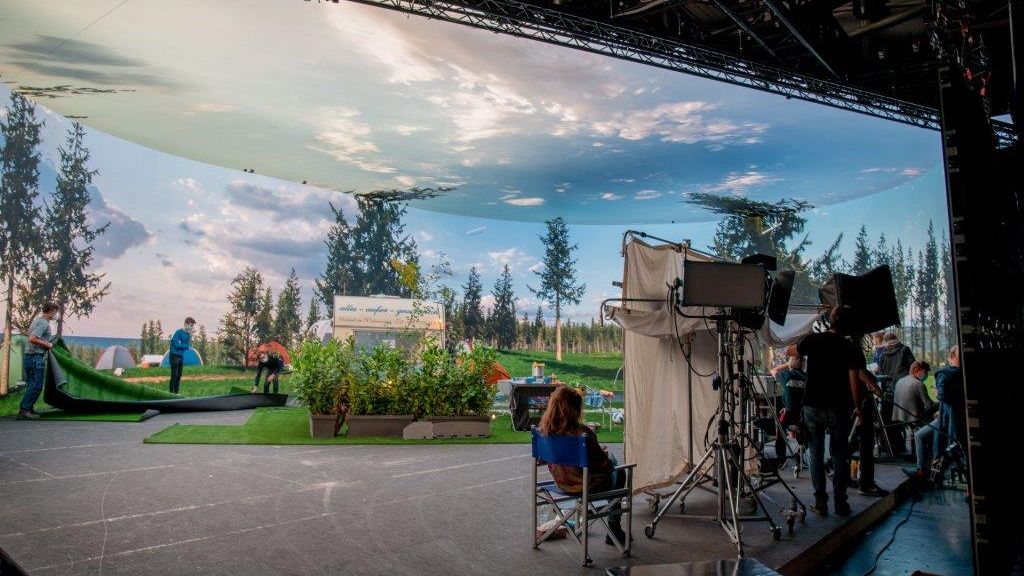
One of the first virtual productions of a commercial in Germany took place in 2020, during the COVID-19 pandemic, at the LED volume HYPERBOWL near Munich. Visa partnered for the project with agency Digitas Pixelpark, production Villicon Salley and Postproduction house Acht.
For the credit card company a commercial was created that featured different locations, with backgrounds projected onto the LED wall, while the actors moved in real, physically built sets. This approach allowed multiple locations to be filmed in a single day, avoiding the otherwise necessary, time-consuming crew relocations. Client requests for changes to the backgrounds could be quickly implemented on-site using real-time technology with the Unreal Engine. To limit the team size during the pandemic, the clients were connected via video stream.
Source: HYPERBOWL

Funny Frisch takes over TikTok
In 2020, snack brand funny-frisch launched a highly successful TikTok campaign, #funnyfrischmoment, in collaboration with the Gen Z-focused agency PlayTheHype. Aimed at a younger audience between the ages of 12 and 25, the campaign invited TikTok users to create and share videos that highlighted their “funny-frisch moments”—times spent enjoying the brand’s snacks with friends or family.
This campaign was built around the Branded Hashtag Challenge format, which encouraged user-generated content. Participants were asked to showcase their moments of joy, making the content highly relatable and shareable. PlayTheHype, leveraging insights from surveys, tailored the campaign to resonate with the target demographic by tapping into their preference for authentic, social experiences.
The impact was immediate and substantial. With over 950 million views and more than 150,000 new followers on funny-frisch’s TikTok account, the campaign proved a massive hit. Brand awareness surged by 36.9%, highlighting the effectiveness of this approach.
The campaign’s success was further amplified by the involvement of influencers such as Marek Fritz and Alex Freerun, and a custom-produced soundtrack by DE FALCON. By aligning itself with TikTok’s dynamic culture and promoting genuine user interaction, funny-frisch managed to create a buzz that not only engaged Gen Z but also solidified its presence on one of the world’s most popular social platforms.
Watch the BTS with Neill Heinisch of Play the Hype
More Information on PXMedia
Stars Wars "Rise of Skywalker" Trailer Premiere in Fortnite
https://www.youtube.com/watch?v=aNLyly-ft74
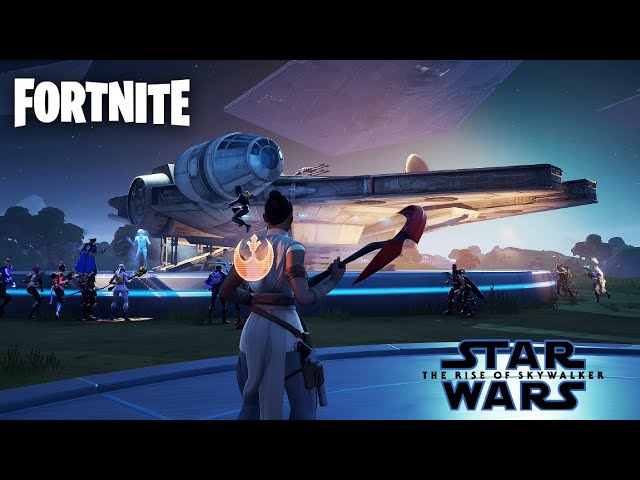
In December 2019, Fortnite hosted a live in-game event in collaboration with Star Wars: The Rise of Skywalker. Held at the Risky Reels location, the event featured the Millennium Falcon engaging in a battle with TIE Fighters before landing. Host Geoff Keighley appeared as a hologram alongside director J.J. Abrams and actor Ben Schwartz, portraying stormtrooper FN-143. Players participated in a poll to choose a scene preview from the upcoming film, selecting the “Jedi Mind Trick” scene. This exclusive clip showed Rey, Finn, and Poe aboard a Star Destroyer, with Rey using a mind trick on stormtroopers.
Following the preview, players voted for their preferred lightsaber color. As the event concluded, Emperor Palpatine’s voice was broadcasted, declaring, “The day of the Sith.” This message, referenced in the film’s opening crawl, was exclusively delivered during the Fortnite event.
After the event, players received their chosen lightsabers and engaged in a team-based lightsaber battle. Additionally, Fortnite introduced in-game content such as TIE Fighter crash sites, lightsabers, and First Order Blaster Rifles, along with character skins for Rey, Finn, Kylo Ren, and Zorii Bliss.
Sources: (Wookieepedia)(Wikipedia)(Fortnite Wiki)
Monster Energy placement in Game "Death Stranding"
https://www.youtube.com/watch?v=Tcv9zX9rFa4&t=16s
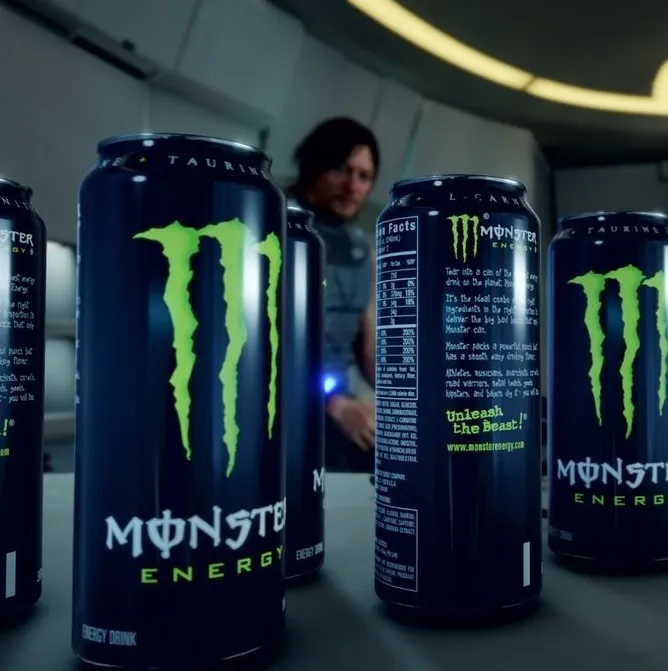
Monster Energy partnered with Kojima Productions to feature its cans prominently in Death Stranding, a highly anticipated AAA video game developed by Hideo Kojima and released exclusively on PlayStation 4 (later on PC). This collaboration marked a bold move for the brand into the world of interactive entertainment, targeting a digitally native, global audience of gamers aged 18–35—our key demographic.
The product, was integrated directly into gameplay: placed visibly in the protagonist’s private room and consumable by players to restore stamina—offering both visibility and functional value. Death Stranding sold over 5 million copies by mid-2021, giving the brand recurring exposure in hours of immersive playtime across millions of users. On average, players spent 30+ hours in-game, with many interacting with our product multiple times per session, maximizing brand impressions in an organic, story-driven context.
The placement generated substantial media coverage, YouTube content, and social media discussion, further expanding reach well beyond the game itself. While some reactions were mixed, the boldness of the integration ensured brand recall. The undertake achieved a rare form of embedded advertising that went beyond product placement—it became part of the player’s survival toolkit.
Though the branding was eventually removed in the Director’s Cut (2021), the campaign’s lifecycle aligned with the game’s peak popularity. This activation demonstrated the potential of gaming as an experiential medium for brand integration, blending functionality, visibility, and storytelling.
Black Mirror "Bandersnatch"
https://www.vimeo.com/1063978130
Netflix is testing the possibilities of interactive content.
Black Mirror: Bandersnatch is an interactive film released by Netflix in 2018, created by Charlie Brooker as part of the Black Mirror anthology series. Set in 1984, it follows Stefan Butler, a young programmer developing a video game called Bandersnatch, based on a choose-your-own-adventure book. As Stefan struggles with deadlines, personal trauma, and reality itself, viewers make decisions that shape his fate.
The film’s key innovation is its interactive storytelling, allowing viewers to choose Stefan’s actions, from simple decisions like what cereal he eats to major plot points affecting his sanity and the game’s success. These choices lead to multiple branching narratives, several different endings, and even secret paths.
As Stefan dives deeper into his work, he begins questioning free will and reality, with meta-commentary on the illusion of choice—mirroring Black Mirror’s themes of technology’s dark impact. Some endings are tragic, involving madness or murder, while others reveal hidden layers of the story, such as Stefan discovering he is being controlled by Netflix itself.
The film was widely praised for its innovative use of interactivity, blending traditional cinema with gaming elements. However, some criticized it for feeling gimmicky or frustrating due to its looping structure. Regardless, Bandersnatch pushed the boundaries of storytelling and set a precedent for future interactive content on streaming platforms.
Watch it on Netflix.

Google Spotlight Stories
https://www.youtube.com/watch?v=JrkslAhyOVc&t=2s
Google Spotlight Stories was an innovative storytelling platform developed by Google’s Advanced Technology and Projects (ATAP) group. Launched in 2013, it explored the future of immersive, mobile-first storytelling by combining animation, 360-degree video, and interactive elements. The goal was to push the boundaries of narrative by allowing viewers to look around and explore scenes from multiple angles—essentially becoming part of the story.
Designed primarily for smartphones, Google Cardboard and VR headsets, Spotlight Stories offered a series of short films created in collaboration with top-tier directors, animators, and studios. Notable titles include Pearl (nominated for an Academy Award), Sonaria, Duet by Glen Keane, and Special Delivery by Aardman Animations.
The platform allowed creators to experiment with spatial audio, branching narratives, and viewer-directed perspectives. Instead of passively watching, audiences could look around in real time, influencing how they experienced the story. This made each viewing unique and added an element of interactivity.
Though Google discontinued the project in 2019, Spotlight Stories left a lasting impact on the evolution of immersive media. It paved the way for new forms of storytelling in VR, AR, and 360-degree video, inspiring creators and tech companies alike to explore the possibilities of interactive cinema.
The project is offline now, but you can still watch the recording of PEARL
Deutsche Telekom - "Move on"
https://www.vimeo.com/1048833893
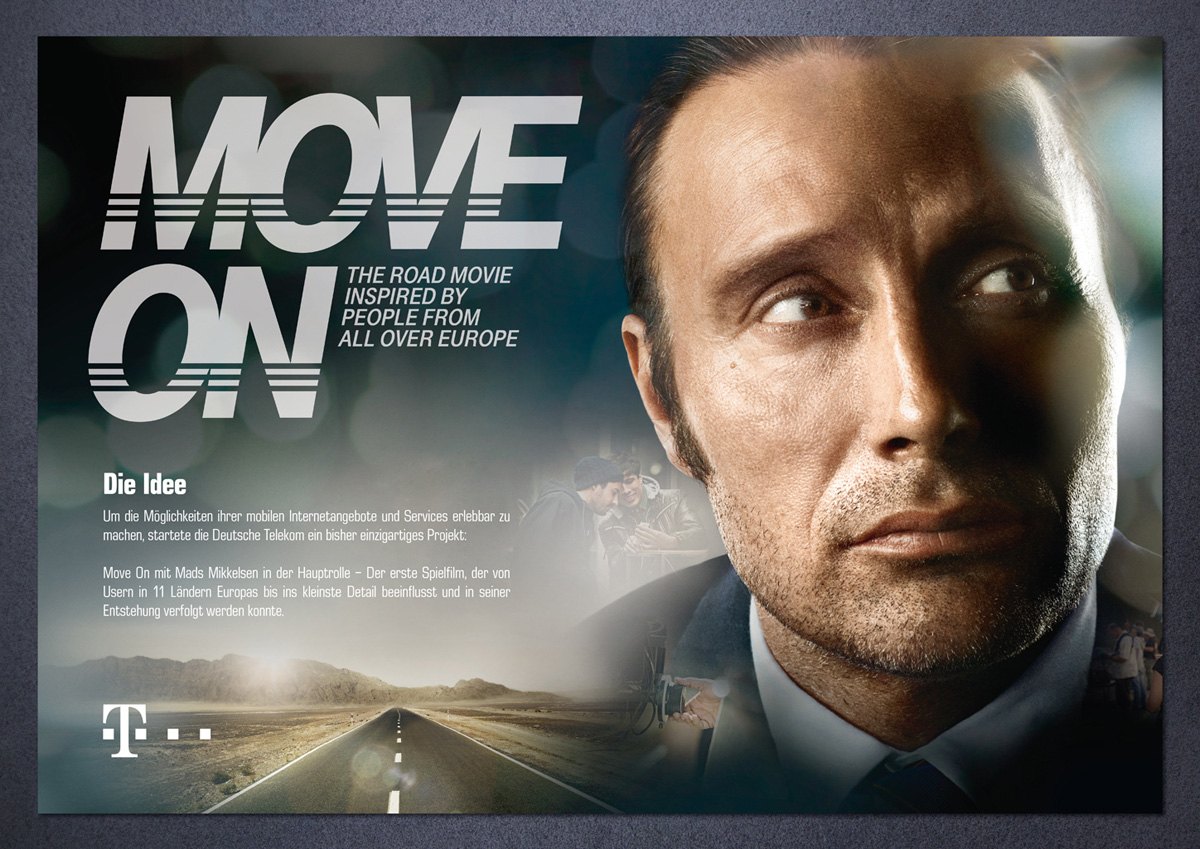
Move On is a thriller from 2012 by Asger Leth with Mads Mikkelsen and Gabriela Marcinkova. In the internet film Move On, Mads Mikkelsen travels across Europe in eight episodes. Each episode is set in a different European country.
Move On tells the story of a conflicted hero (played by Mads Mikkelsen) and his journey through Europe. The agent arrives in Rotterdam and receives a mysterious silver suitcase. The transportation of the suitcase is to be his last assignment. What sounds like a simple assignment turns into a nerve-wracking chase with an unknown enemy - and the hero's own past. He doesn't know what's in the suitcase, but his pursuers seem to know. And they seem to be prepared to do anything to get it. The action-packed odyssey blurs the boundaries between friend and foe. Not knowing who he can trust, he begins an affair with a young woman (Gabriela Marcinkova) he meets along the way. But is she really just the charming hitchhiker or is she also after the suitcase?
Background & Info:
Move On (also released with the subtitle: The Road Movie Inspired by You) was produced by Deutsche Telekom, Jo!Schmid Filmproduktion GmbH (producer: Michael Schmid) in co-production with Nobody CPH. Asger Leth (A Risky Plan) took the director's chair for the unusual road trip Move On. The Move On crew received a lot of support during the making of the film. The producers launched an online call for active participation in the unusual film project. Over 9000 suggestions were received and around 400 were finally incorporated into the screenplay by Matt Greenhalgh (Nowhere Boy). The episodic film starring Mads Mikkelsen (The Hunt, James Bond 007 - Casino Royale) was made available online on YouTube.
Source: Moviepilot

ONLY jeans experiments with interactive brand content
https://vimeo.com/1063982170
“The Liberation” was an innovative interactive campaign launched in 2012 by the Danish fashion brand ONLY, aiming to rejuvenate its image and engage a younger audience. This digital experience seamlessly blended elements of film, fashion catalog, music video, and online shopping into a cohesive narrative.
The storyline followed three rebellious young women who invigorate a sleepy town with their adventurous spirit. Viewers could interact with the film by pausing at any moment to explore and purchase the featured clothing items, integrating shopping directly into the narrative.
To enhance engagement, the campaign incorporated interactive elements where users could influence the storyline, such as attempting to steal a pair of jeans, which, if successful, were sent to them free of charge. The soundtrack, featuring Swedish artist Lune, synchronized with user interactions, pausing and resuming seamlessly to maintain immersion.
The campaign achieved significant success, with traffic to ONLY’s website increasing by 442% post-launch. The dedicated campaign site attracted over 232,000 unique visitors and more than 410,000 page views. This innovative approach garnered industry recognition, including a Gold Lion at the Cannes Lions International Festival of Creativity.
“The Liberation” exemplified how fashion brands could leverage digital platforms to create immersive, interactive experiences that resonate with contemporary audiences, effectively merging storytelling with e-commerce.
Sources: Fast Company & lovethework.com

BMW - The Hire
https://www.vimeo.com/818509092
Who remembers "The Hire" from BMW?
In 2002 there were a total of eight episodes with Clive Owen in the leading role and other stars such as Mickey Rourke, Stellan Skarsgård and Gary Oldman, directed by Wong Kar Wai, Tony Scott or, as in the example, Guy Ritchie, with Madonna in the leading role.
As a reminder, the films were available on DVD (those silver plastic disks), which were highly coveted at the time and traded at high prices...
Content-sharing on Boomer, so to speak 😉
Find the episodes and more information on brandhopper.